The first edition
Trees & the Grid 2026
Berlin, 14 and 15 October 2026. How the first edition of the European UVM Forum ran: the photos, the programme, and the people on stage.
Second edition · Berlin, 13–14 October 2027- Forum day
- 15 Oct · betahaus Kreuzberg
- Evening before
- 14 Oct · ZOE Bar
- Sessions
- 7
- Countries
- 13
In short
Thirteen countries, seven sessions, one room.
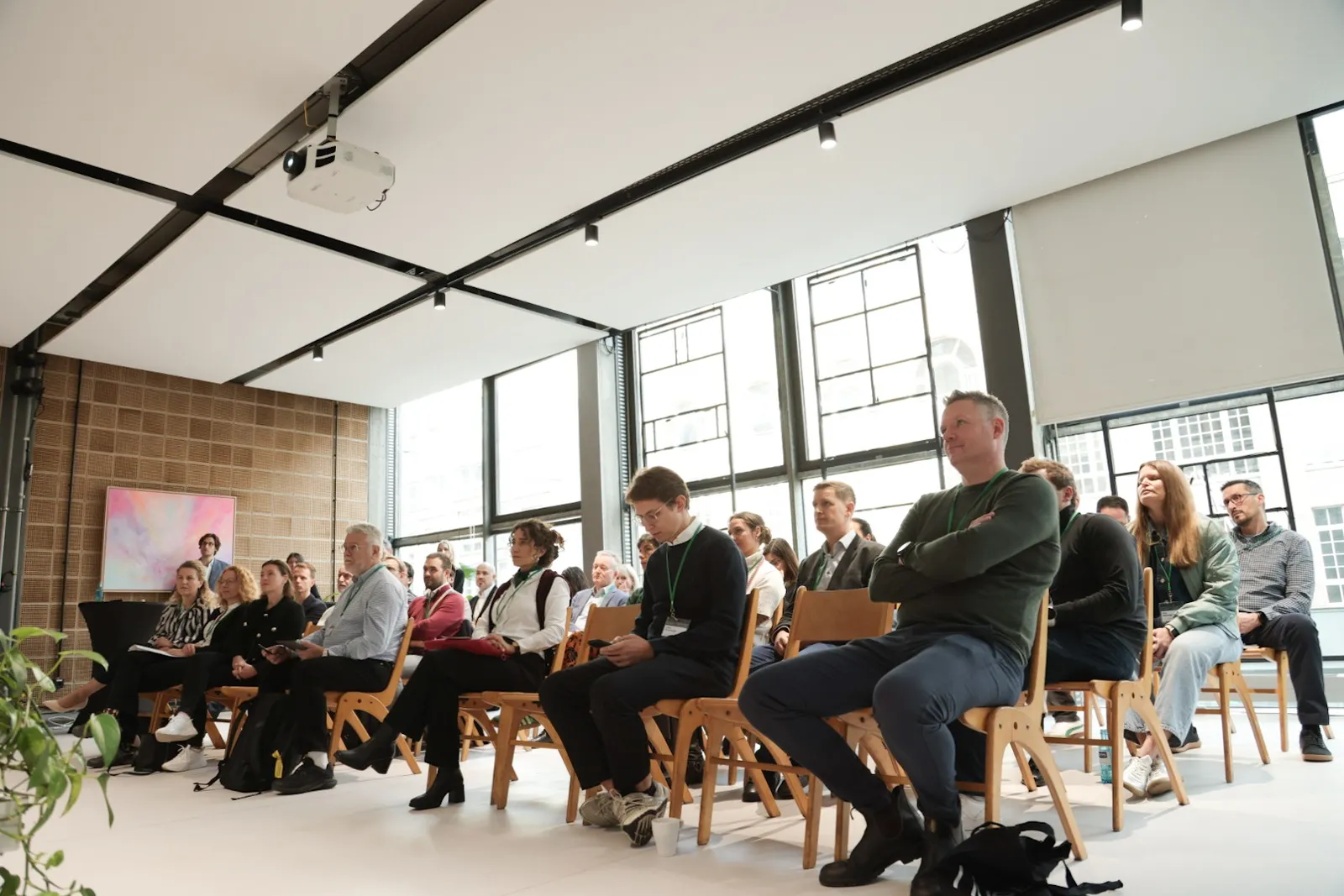
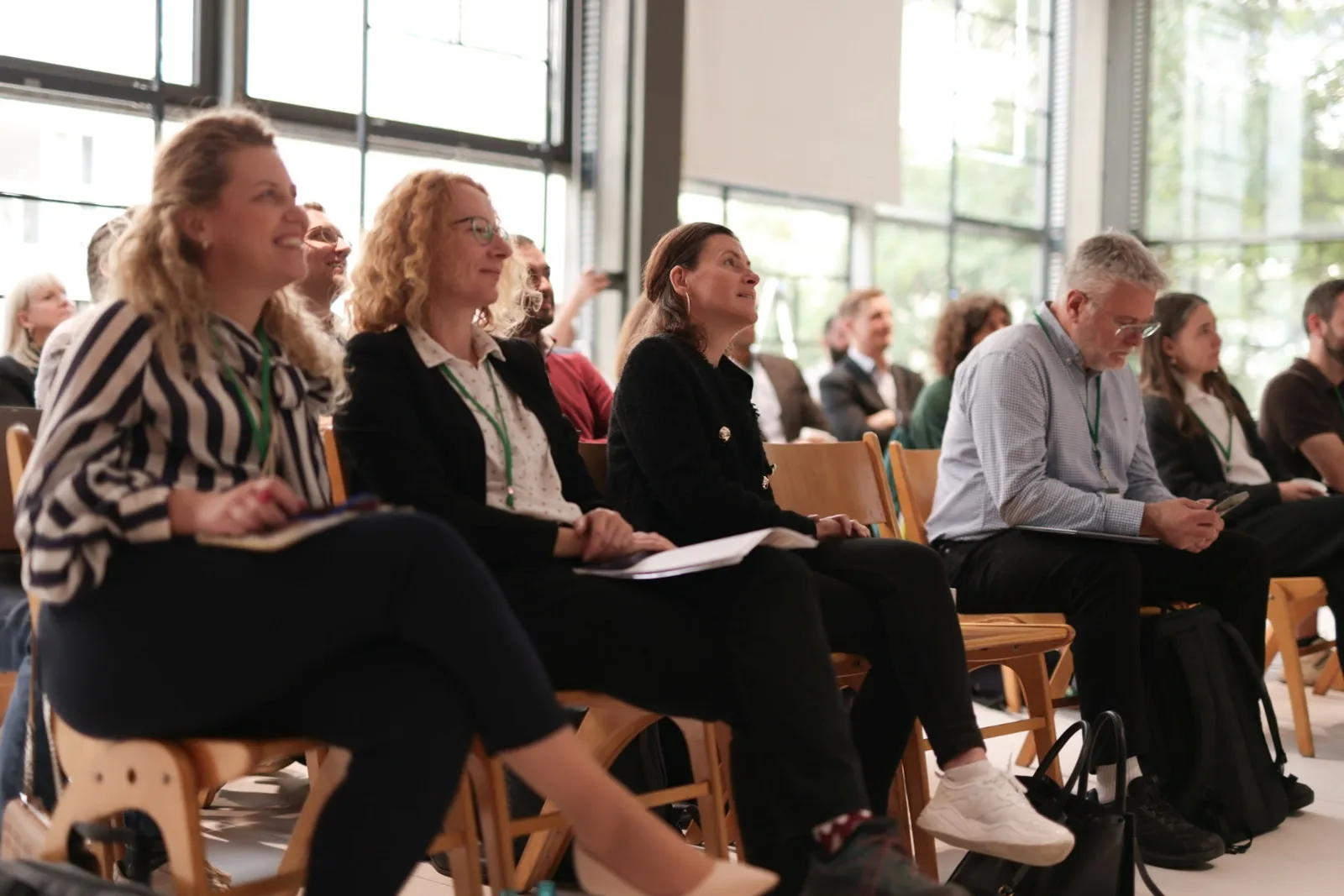
On 15 October 2026, utilities from 13 countries met at betahaus Kreuzberg for the first Trees & the Grid, after a networking evening at ZOE Bar the night before.
Seven sessions filled the day: a keynote on what an open-data grid would look like, a panel on getting ready for wildfire and storms, a peer-consulting workshop on the problems people had not cracked yet, case studies on the business case for ecological corridors, on EU funding for greener corridors, and on satellite vegetation management at scale, and a closing panel on the next decade. In between, people who run the same programmes in different countries compared notes, which is what the forum is for.
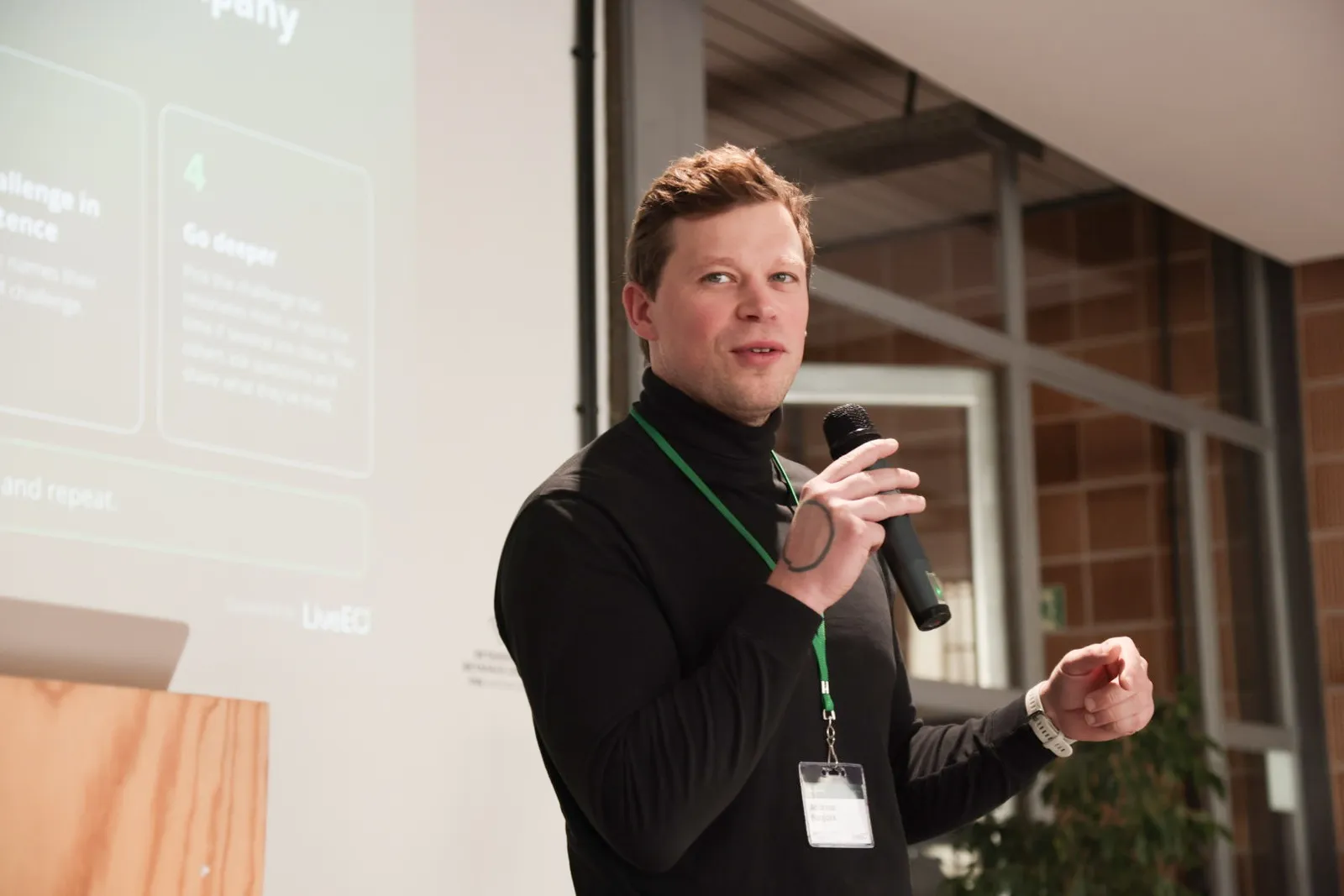
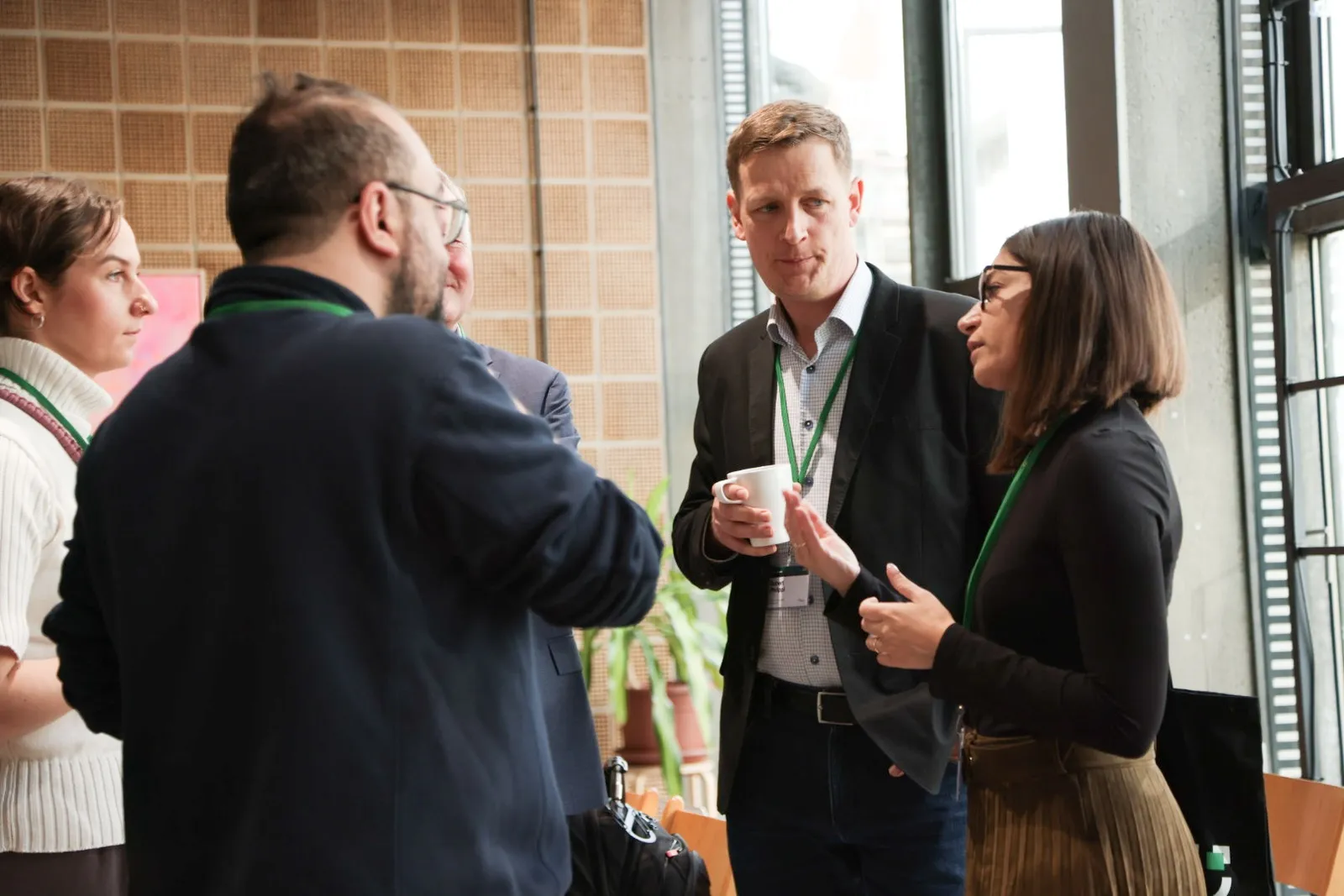
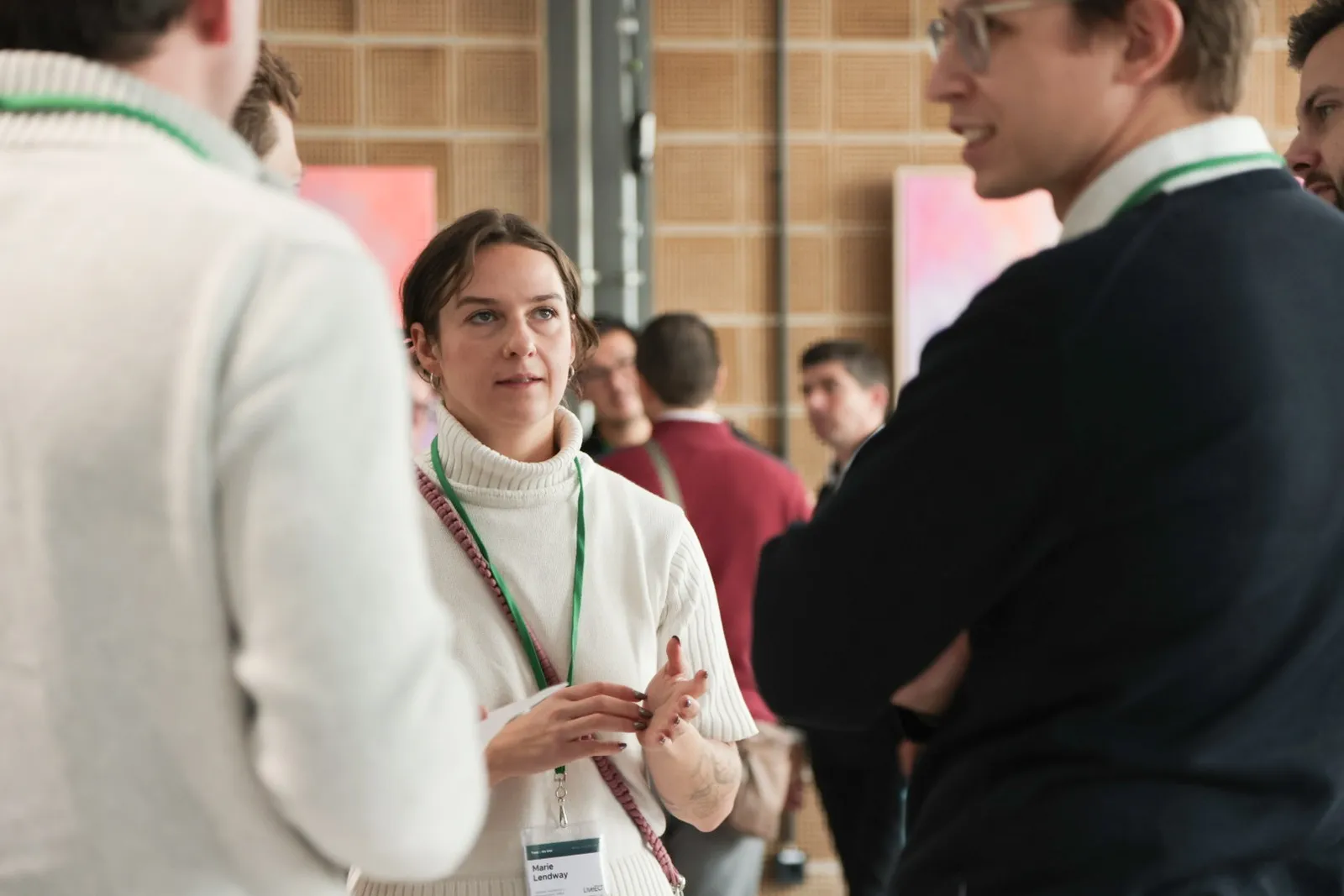
The day
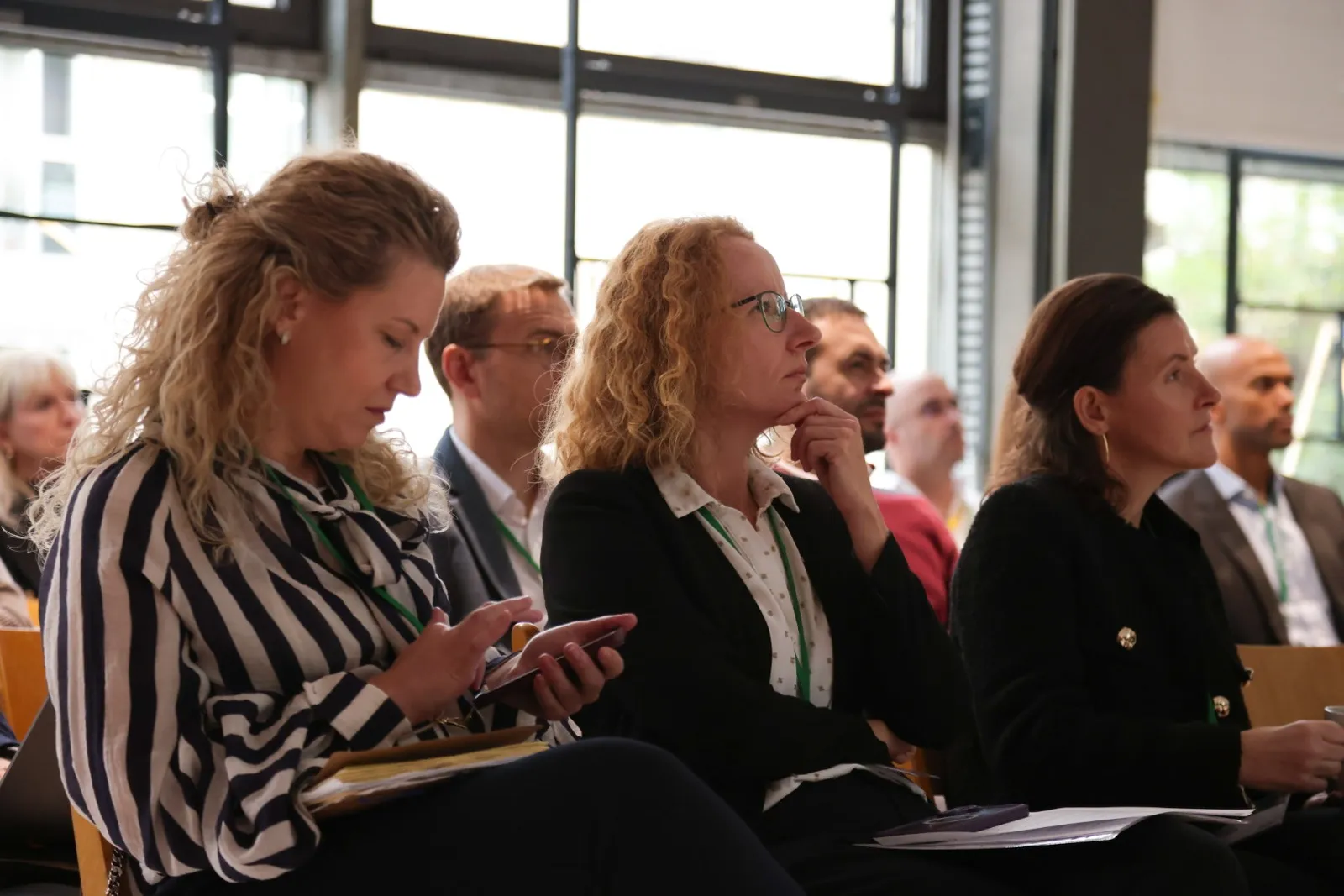
What it looked like.
Programme
The day as it ran.
Open a session for what it covered.
Wed 14 Oct · Evening: welcome drinks
ZOE Bar, Hackescher Markt
17:00–20:00
Welcome drinks
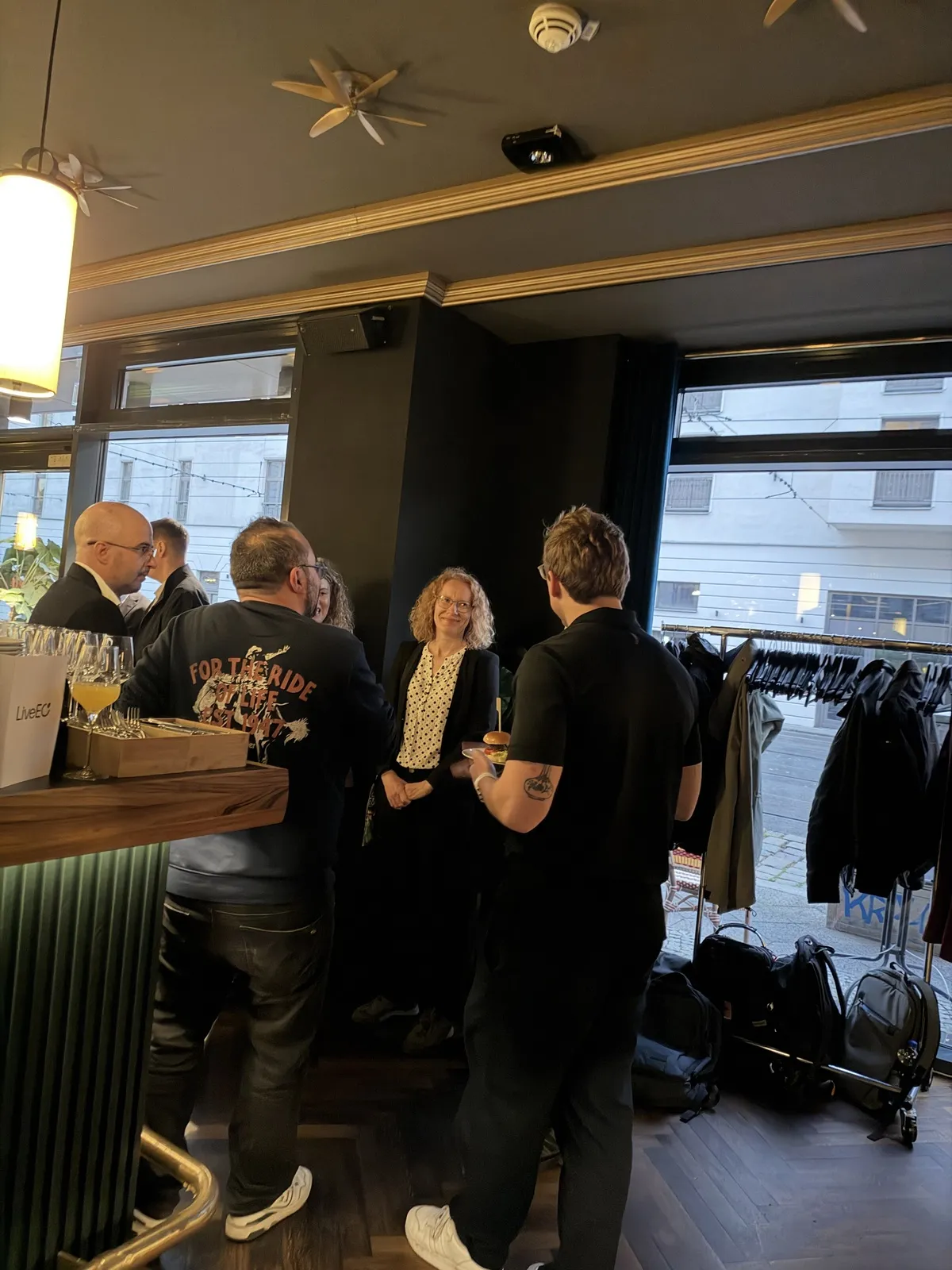
Drinks, finger food and a welcome toast at 18:00 at ZOE Bar, Hackescher Markt.
Thu 15 Oct · Forum day
betahaus, Kreuzberg
From 08:30
Arrival and registration
Badges, coffee and pastries.
09:15
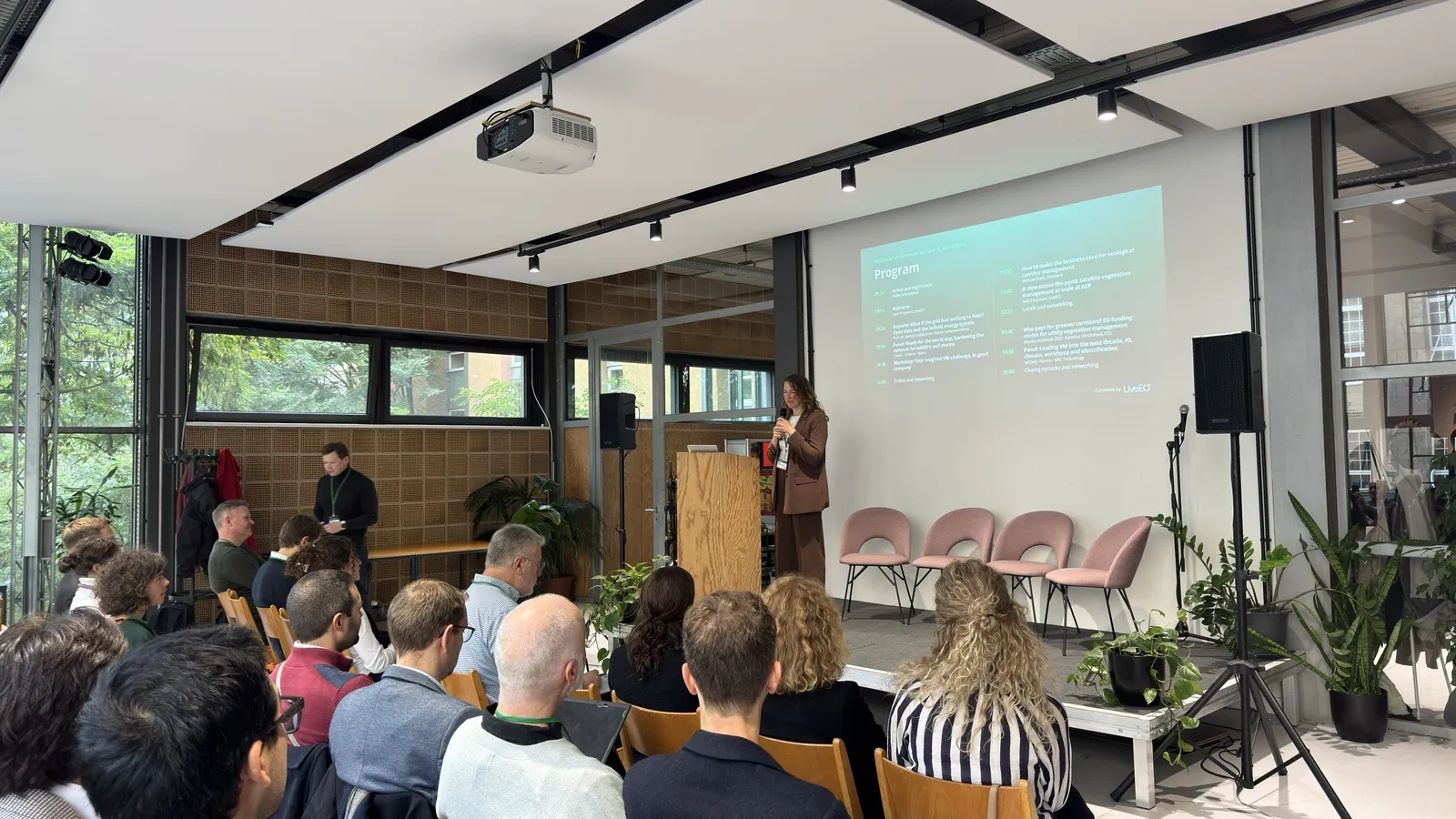
Welcome
Sven Przywarra, Co-CEO, LiveEO
09:20
Keynote: What If the Grid Had Nothing to Hide? Open data and the holistic energy system
Prof. Dr. Kathrin Goldammer, Director, Reiner Lemoine Institut
Keynote: What If the Grid Had Nothing to Hide? Open data and the holistic energy system
Prof. Dr. Kathrin Goldammer, Director, Reiner Lemoine Institut
What would change if utilities opened their data? Today most guard it closely; even the position of overhead and underground lines is rarely shared. Prof. Dr. Kathrin Goldammer of the Reiner Lemoine Institut argues that electricity, heat, transport and industry must couple, and that making this work depends not on more lines but on an intelligent, transparent grid, with digitalisation as its precondition. Open data is one missing layer: it brings the public on board and unlocks new services and innovation. Realising it also means reforming regulation, market design and institutions, since the real constraint is institutional, not technological. She sketched scenarios for the holistic system we could build, connecting energy, people and the environment, followed by a short interview.
10:00
Panel: Ready for the worst day, hardening the network for wildfire and storms
Jon Anders Krokann, Tensio, Robert Philippi, 50Hertz, and Dragos Brudiu, Bento
Panel: Ready for the worst day, hardening the network for wildfire and storms
Jon Anders Krokann, Tensio, Robert Philippi, 50Hertz, and Dragos Brudiu, Bento
Preparing the network for wildfire, storms and flood, and making fast, confident calls when an event hits. The panel compared how they harden the network ahead of the season, what the decision process looks like under live pressure, and what they would do differently after their last serious event.
What separates the utilities that restore fastest is preparation and information: the right crew with the right tools and spare parts, stock close to where the damage will be, and detailed digital work orders on the crew's tablet instead of a briefing and a piece of paper. With experienced linesmen retiring, digitalising what the old hands know is how the new teams keep up. The data the panel wished it had: weather and soil moisture to predict growth between inspections, the consequences of a given tree falling, and a live view of crews, skills and shared equipment, so that a dashboard replaces a round of phone calls.
Tensio's cutting work orders automatically text the affected landowners, using Norway's national parcel register: "We can do quite a lot of work as long as people know we are doing it." Norway's new rules put new distribution lines underground and give the higher-voltage overhead lines markedly wider corridors, and Tensio encourages landowners to replant at wider spacing so the forest next to the line stands up to storms. The panel's advice for next season: look at the vegetation in winter as well as in the summer survey season, inspect more often with more parameters, and plan for winter as if it comes every year, because it does.
10:30
Workshop: Your toughest VM challenge, in good company
Small-group peer consulting, 2 to 3 rounds
Workshop: Your toughest VM challenge, in good company
Small-group peer consulting, 2 to 3 rounds
Bring the VM problem you have not cracked yet. In small groups of three, one person put a real, current challenge on the table while the other two acted as their consultants: asking sharp questions, comparing what worked for them, and offering concrete ideas. Then the group rotated, so everyone got the group focused on their own problem. Two or three rounds, lightly facilitated and grouped by topic so the input stayed relevant.
11:00
Coffee and networking
11:30
How to make the business case for ecological corridor management: realistic numbers and financial mechanics
Michael Wahl, ECM Pioneer, Westnetz
How to make the business case for ecological corridor management: realistic numbers and financial mechanics
Michael Wahl, ECM Pioneer, Westnetz
Ecological corridor management (ECM) is most often justified on biodiversity grounds. Drawing on E.ON / Westnetz's experience scaling ECM across one of Europe's largest distribution networks, Michael Wahl presented the realistic numbers and the financial mechanics behind it. ECM in one line: selectively remove the fast-growing species, promote slow-growing trees and shrubs, stabilise the forest edge, and keep open, line-shaped spaces that connect habitats, give crews access and act as fire breaks. Four steps (mapping by biologists in the corridor, planning with the stakeholders, implementation by forestry contractors, monitoring) serve four kinds of goal: biological, technical, social and financial.
The worked example: a 5,000 km high-voltage grid spending €2 million a year on conventional corridor management for 1,000 km (5,500 ha) of vegetated corridor converts to ECM over six years at 170 km a year. Mapping and planning add 100 to 120% on each year's stretch, so the annual budget rises to €2.25 to 2.4 million, roughly €2.4 million extra in total. The business case is a long-term one: costs are high during the transformation and harmonise after five to seven years, after which the corridor needs only regular, moderate maintenance, emergency pruning disappears, and resilience against storms and fire comes as part of the deal. Because maintenance is OPEX and long-term gains rarely make it into budget planning, ECM has to be a board-level decision that is monitored over years, not budget rounds.
Where satellites fit: mapping stays with biologists on the ground and implementation stays with the chainsaw, but planning can gain from better imagery, and monitoring is the natural fit: checking that the right species were removed, in the right places, and that the open spaces were created.
12:00
A view across the pond: deploying satellite vegetation management at scale at AEP
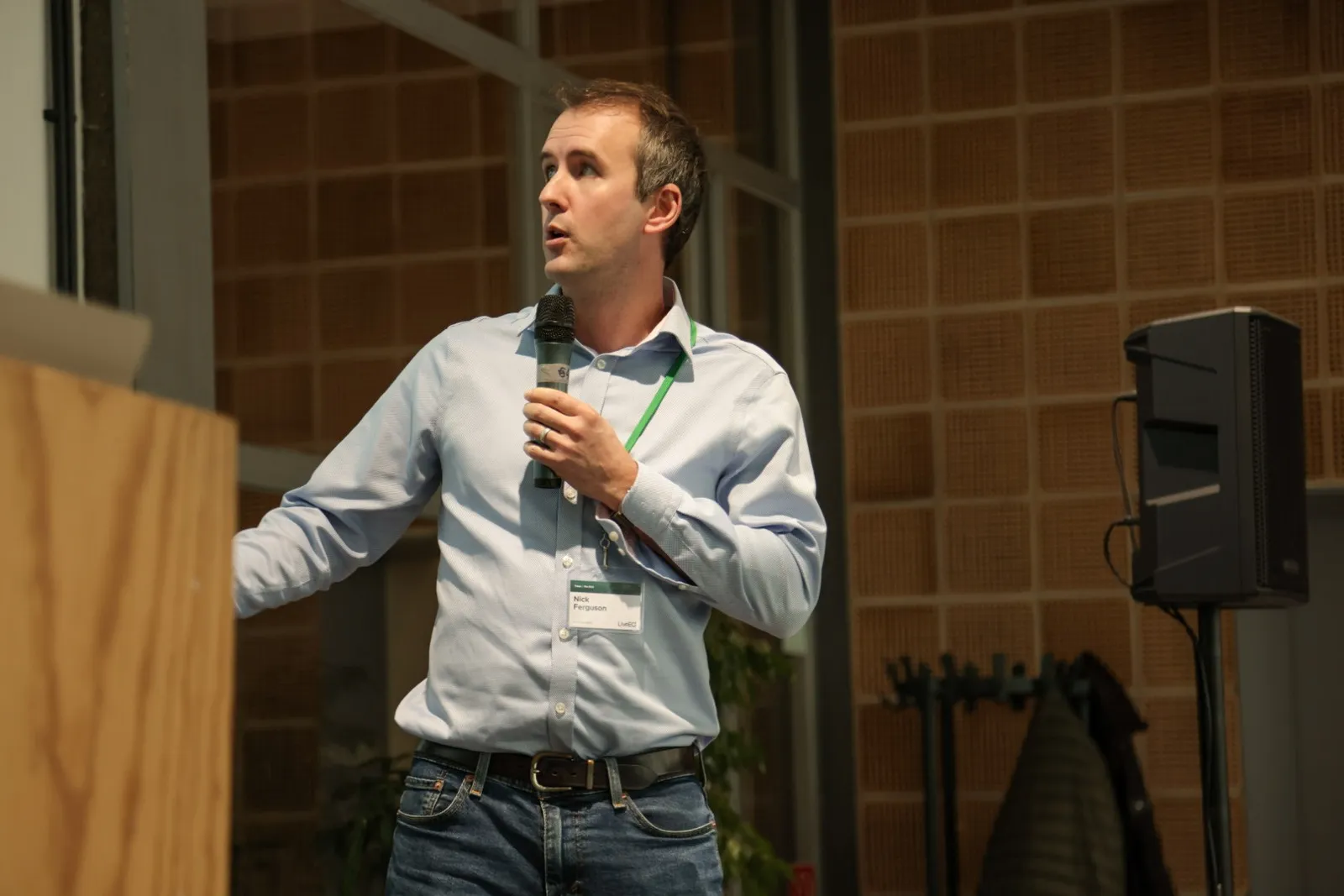
Nick Ferguson, Chief Evangelist and host of the UVM podcast, LiveEO
A view across the pond: deploying satellite vegetation management at scale at AEP
Nick Ferguson, Chief Evangelist and host of the UVM podcast, LiveEO
A view from North America: how AEP, one of the largest utilities in the United States, brought satellite-based vegetation management into its operations at scale. Nick Ferguson outlined the goals behind the programme, how it was rolled out across a large and varied network, and what utilities in Europe can take from the experience.
12:30
Lunch and networking
14:00
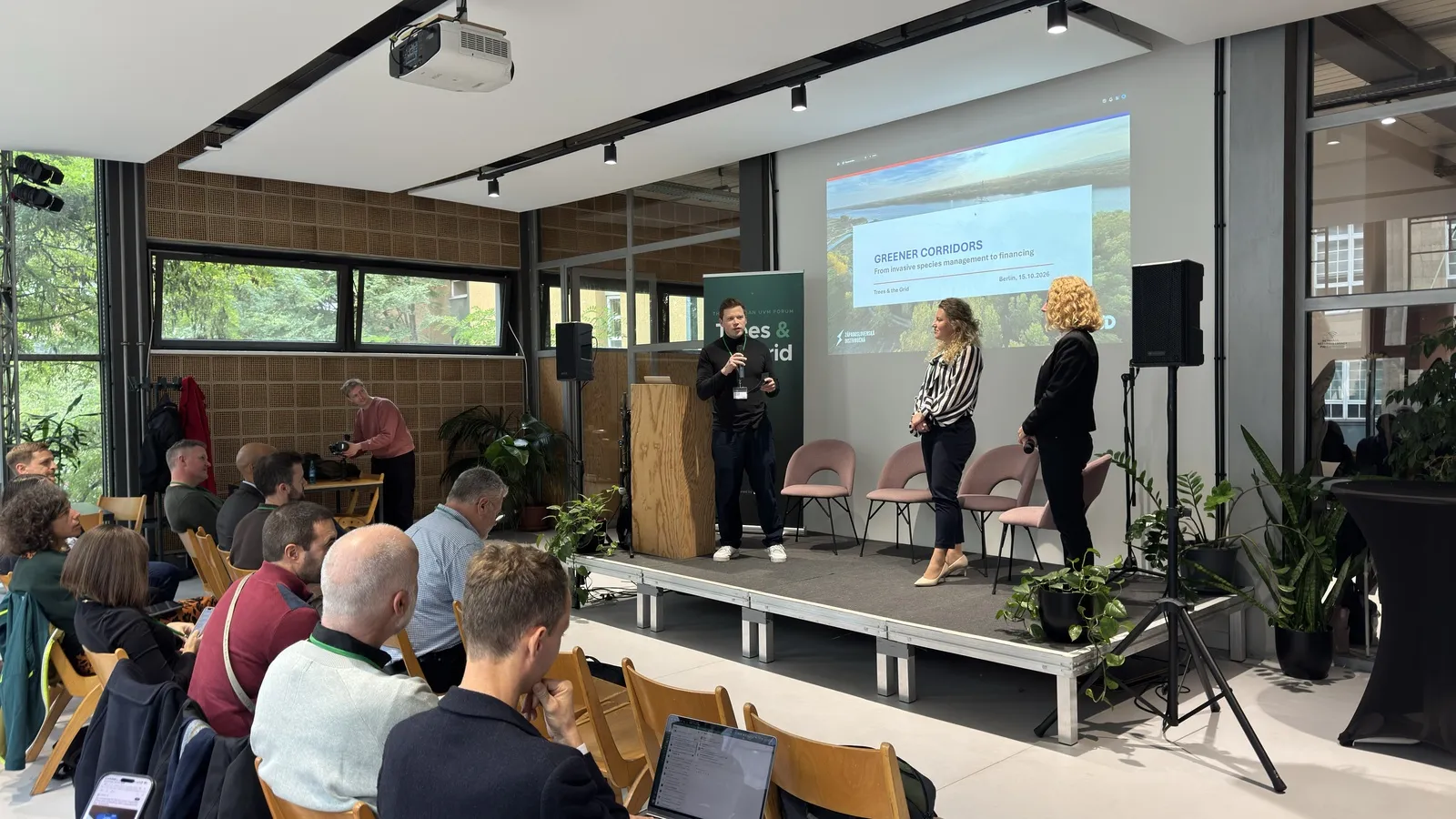
Who pays for greener corridors? EU funding routes for utility vegetation management
Monika Božíková, Západoslovenská distribučná, and Katarína Varcholová, Východoslovenská distribučná
Who pays for greener corridors? EU funding routes for utility vegetation management
Monika Božíková, Západoslovenská distribučná, and Katarína Varcholová, Východoslovenská distribučná
ZSD and VSD run 102,000 km of distribution grid across Slovakia, where 40% of the land is forest and the lines cross 642 Sites of Community Importance, 41 Special Protection Areas and nine national parks. Katarína Varcholová opened with the vegetation side: black locust (Robinia pseudoacacia) regrows about two metres a year and has become one of the region's biggest vegetation challenges, so corridors are assessed one by one and removal is treated as an ongoing process. A controlled trial with the National Forestry Centre and two Slovak universities compared milling, drone-applied herbicide and felling: mechanical and chemical treatment were similarly effective, none harmed soil fauna, and managed corridors turned out to be good habitat for sensitive invertebrates. The recommendation is mosaic-style, adaptive management, and the biggest lever is new lines, where the future maintenance can be designed into the clearing works from the start.
Monika Božíková then took the money question. Across Europe, Member States are writing their National Restoration Plans, and what the structural funds pay for will follow those plans, so utilities need to be in them with their network maps, priority sections and costed measures. No EU programme finances ECM as such yet, but it can ride along: ZSD and VSD have combined it with bird-protection projects under LIFE, used CEF Energy for projects of common interest, earned a Seal of Excellence for a cross-border LIFE proposal with partners in Hungary and Romania, and got ECM into Slovakia's draft restoration plan and its critical-infrastructure strategy. Capitalising ECM in new assets, rather than carrying it as OPEX, is the other half of the answer, and partners for a joint black locust proposal are welcome.
14:30
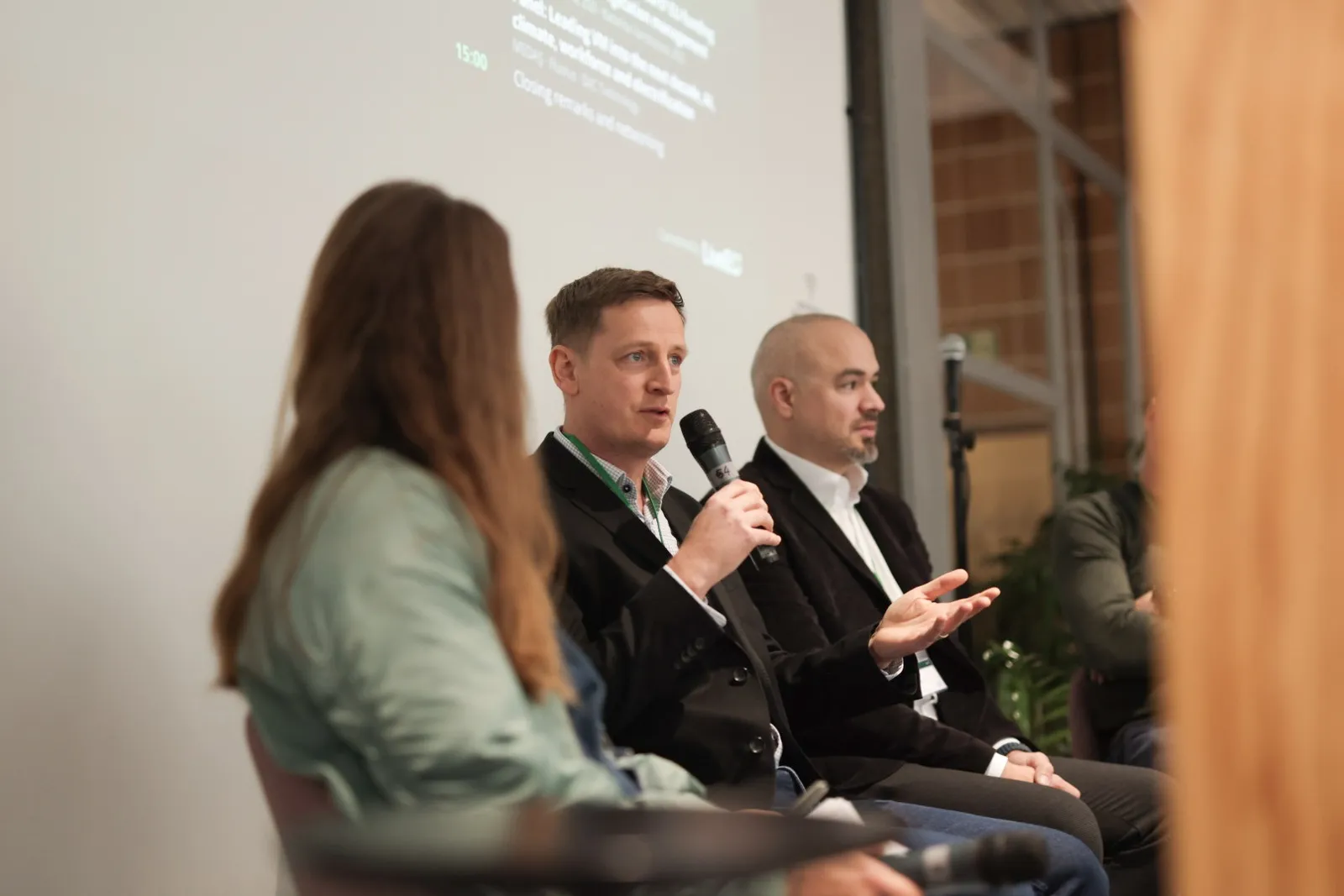
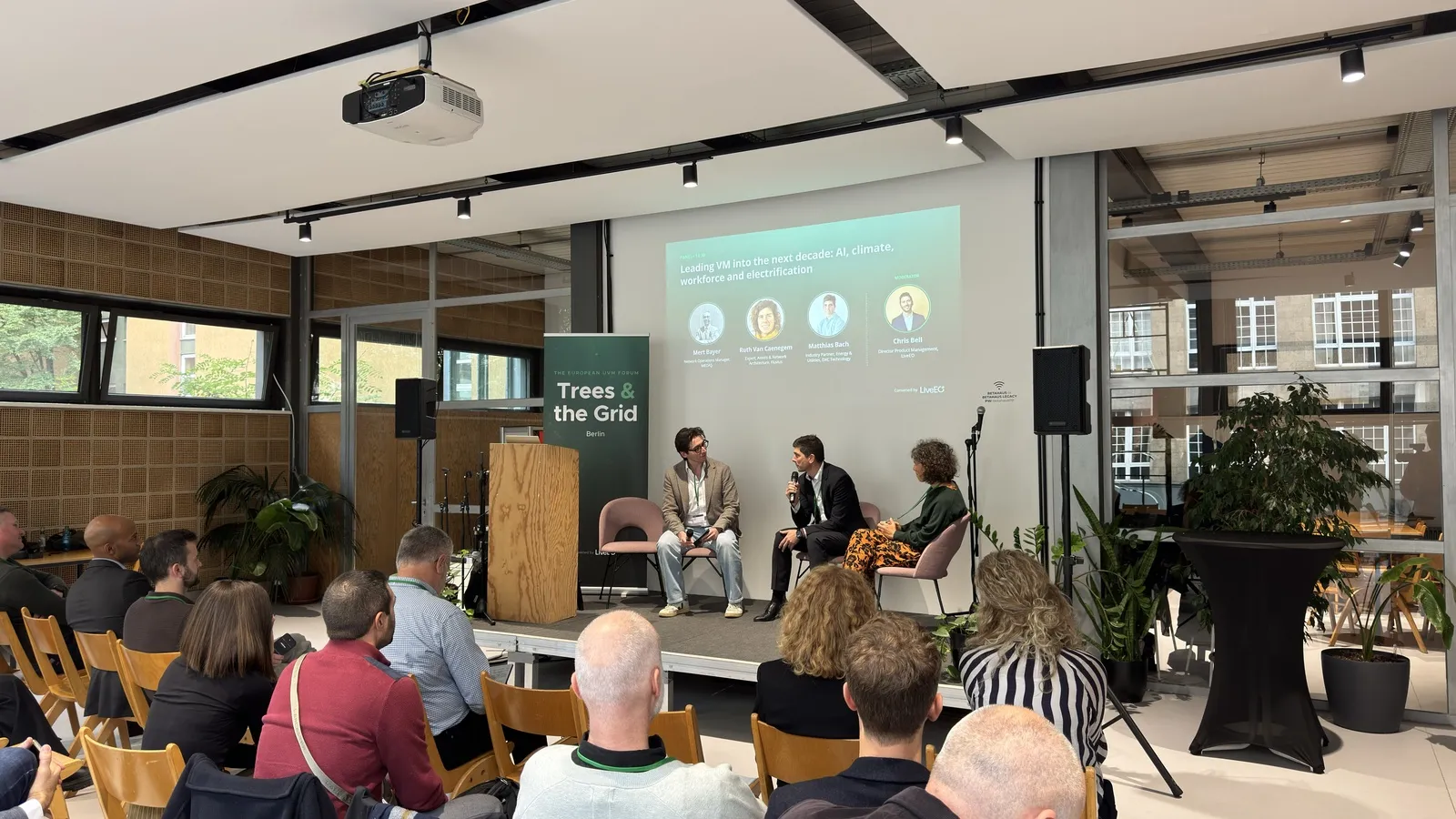
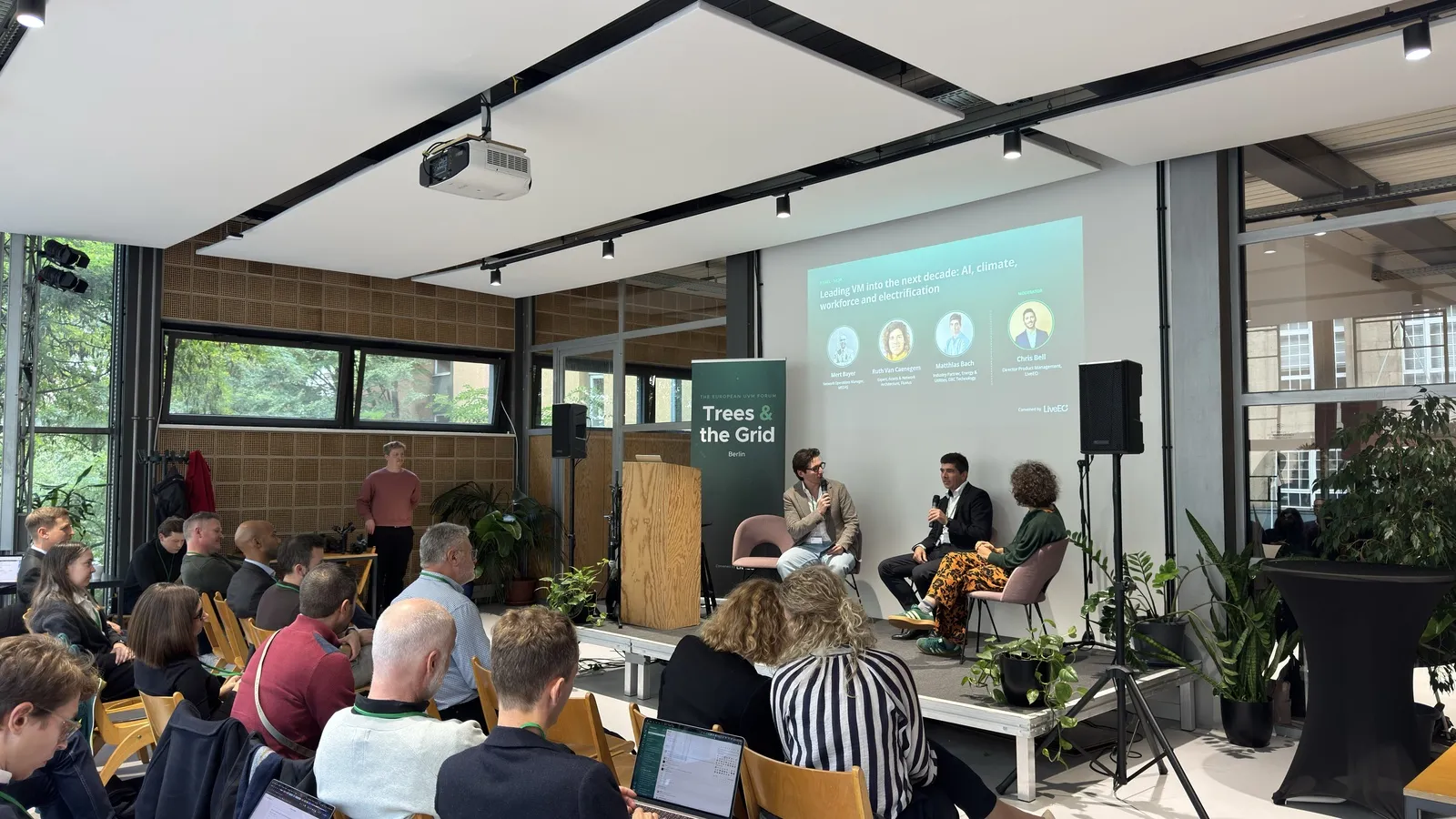
Panel: Leading VM into the next decade, AI, climate, workforce, and electrification
Ruth Van Caenegem, Fluvius, and Matthias Bach, DXC Technology
Panel: Leading VM into the next decade, AI, climate, workforce, and electrification
Ruth Van Caenegem, Fluvius, and Matthias Bach, DXC Technology
A closing look at the forces reshaping vegetation management over the next ten years: analytics and AI moving into the decision loop, a changing climate, a stretched and ageing workforce, and the load electrification is adding to the network.
In Flanders, vegetation along the distribution grid is managed by the public domain rather than the DSO, so the decade ahead is about collaboration: cities redesigning streets for the climate, with more trees, and utilities that have to run more cables under the same streets, deciding together for the common good; the framework for that does not exist yet. Heat is already a grid problem, with one DSO seeing incidents triple during the last heat wave, and trees keep assets cooler, so they are part of the answer even as electrification adds cables to the same ground.
On AI, only one in ten use cases reaches production, and technology is not what separates them, since everyone has the same clouds and models. The programmes that reach daily operations start from an operational challenge, work back to the data and only then to the technology, and involve the field and the dispatchers from day one. What utilities underestimate is no longer the data but the humans: without trust in the reasoning behind a recommendation, specialists will not use it, pilots will not scale, and the models will not improve. AI augments, it does not replace. For Monday: start with the use cases, not the data lake; start small, measure the outcome, scale what works, do not wait three years for a better model, and talk to each other.
15:00
Closing remarks and networking
Speakers
Who was on stage.
Utility practitioners first, with academics and industry experts where they added to the conversation.
Utilities in the room
Forum day at betahaus Kreuzberg, welcome drinks at ZOE Bar on Hackescher Markt.